
He used SenseTime Seko to turn a nightmare into a hit short series
Recently, a Japanese-style zombie short series called Du Hai has taken major platforms by storm. Its cinematic film texture quickly captured public attention: the trailer for the "Local Edition" alone has surpassed 24 million views, with nearly one million likes on a single post. The Du Hai series has now reached Episode 9, with total video views exceeding 74 million.


Many assumed that a seasoned team was behind it—a Japanese-speaking screenwriter, professional artists and an experienced director. The truth, however, is that the entire "production crew" consisted of just one person and one tool.
The creator, who goes by @CHunye (椿野大怪),is 22 years old and from Guizhou. Now a third-year art and design student at a university in Jiangxi, he does not speak a word of Japanese, yet has created a short series with an unmistakably Japanese-drama feel.
The tool, SenseTime's Seko,is a creator growth platform that brings Agents, an infinite canvas and a Skill ecosystem into a single workflow, enabling one person to coordinate an entire production crew.
A nightmare grows into a 「film」
The story began with a nightmare. CHunye dreamed that he was trapped on a ship when a zombie outbreak began. He called for help from the people around him, but they were all speaking Japanese.
After waking up, he decided to recreate the dream world with AI. Interestingly, he does not speak a word of Japanese. The dialogue with its distinctly Japanese drama feel was created by translating each line from Chinese into Japanese with an input method, then pasting the translations directly into prompts for the AI to generate.
CHunye first encountered AI video at the end of April this year. After a friend suggested, You'll go viral if you post it online, he uploaded the first trailer for Du Hai to a video platform. Although it was only 40 seconds long, the trailer quickly went viral, surpassing 6 million views. On September 7, he released the second trailer for Duhai, which also attracted widespread attention. It has since surpassed 23 million views on a single platform and received nearly one million likes.
Since then, CHunye has been a student by day and a creator after class. To release one episode a week, he often works until two or three in the morning. A finished episode is typically assembled from hundreds of fragmented shots, each lasting just one or two seconds. His monthly living expenses are only RMB 1,500, while the computing cost of producing one minute of finished footage can exceed RMB 1,000. To keep costs as low as possible, he first generates footage in 720p and then enhances it, simply because it is slightly cheaper than generating in 1080p. When that still was not enough, he borrowed money from classmates.
SenseTime Seko brought *Du Hai* to life
The turning point came after Episode 2. A content creator discovered him and recommended him to SenseTime's Seko. Starting with Episode 3, all of Duhai was produced on SenseTime's Seko.
For CHunye, the biggest change was that 「he no longer had to worry about credits.」
SenseTime's Seko provides computing support for contracted creators, covering nearly all production costs. In CHunye's words, 「I no longer have to worry about quality. There is now a platform willing to believe in you and back you up.」 As a contracted creator, CHunye is also eligible for guaranteed income and cash incentives for viral hits. That support enabled Duhai to evolve from a project that 「might have been shelved midway」 into a complete serialized production.
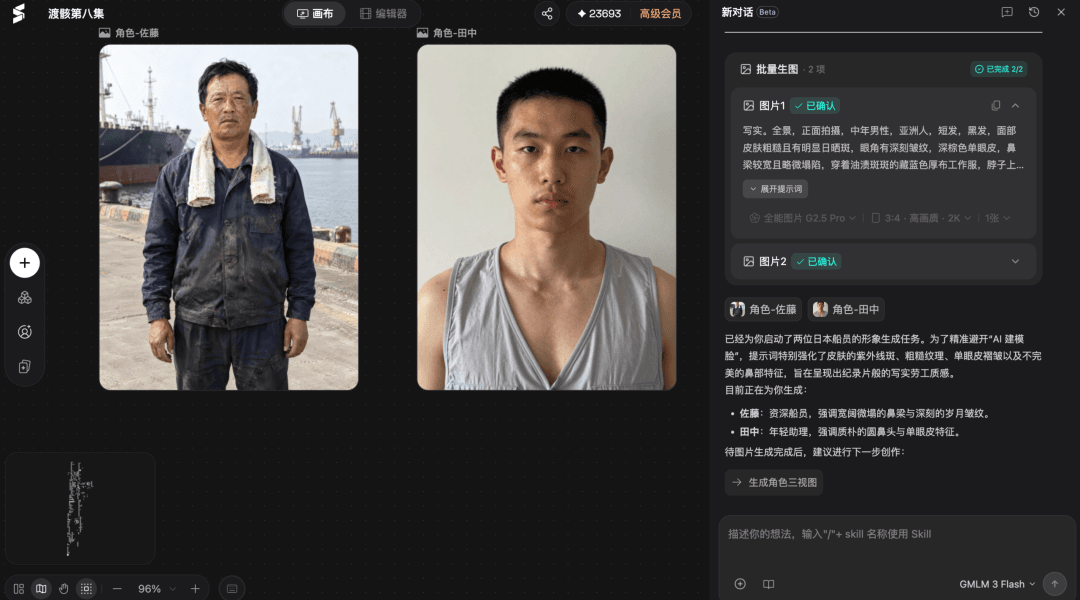
Episode 8 of Duhai, created with Seko
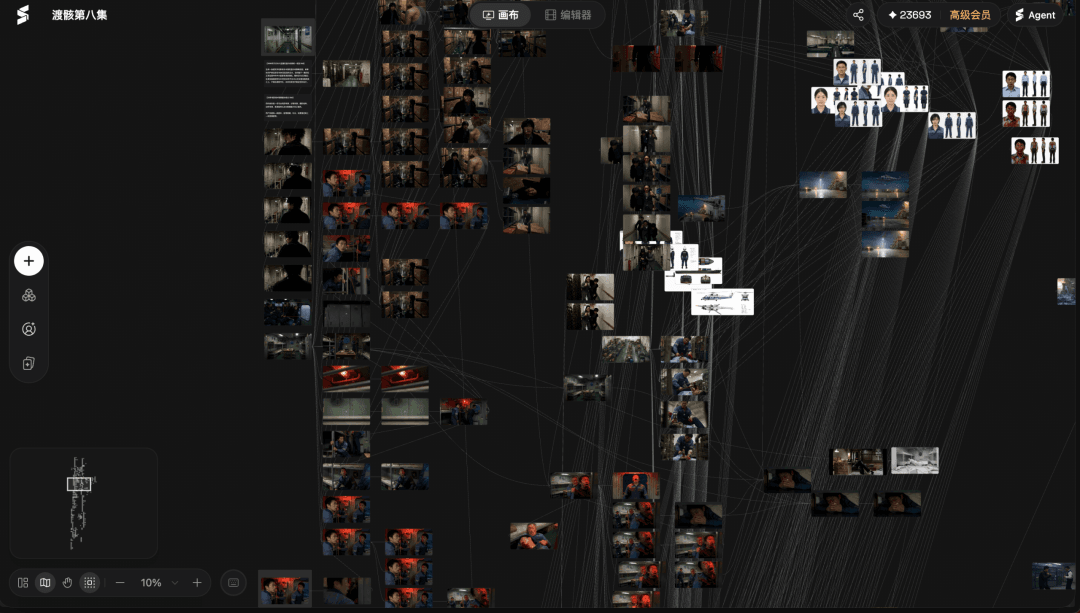
Episode 8 of *Du Hai*, Seko canvas assets
But SenseTime's Seko provides more than computing power:
An Agent fills the gap in professional expertise.Through CHunye's experience using Seko, Seko's Agent capability gradually came to understand his workflow. It can draw out the characters in a creator」s mind through targeted questions, refine prompts that can easily exceed 5,000 characters for a single shot, and even proactively suggest shot ideas.
One canvas connects the entire series.The canvas is also one of Seko's defining features, addressing one of creators」 biggest pain points. Characters, settings, props and sound profiles are all consolidated on the canvas, allowing creators to call up historical assets directly whenever they begin producing a new episode. If a visual is not quite right, they can simply select an area to edit or remove it—making the process remarkably convenient.
One asset system brings cinematic quality to life. Seko's asset system gives every major character a dedicated sound profile and a range of visual states, including clean, dusty, bloodstained and battle-worn looks. This comprehensive production asset management system is precisely what gives Duhai a level of polish that rivals that of the small screen.
The next phase of AIGC will be defined by aesthetics and storytelling.
The cinematic storyboard creation method that CHunye refined repeatedly while making Duhai will soon be launched exclusively on Seko as a Skill. Rooted in CHunye's real-world creative practice, the method distills his distinctive understanding of shot composition, visual atmosphere and narrative pacing, offering a rare first-hand creative reference.
To date, Seko has brought together exclusive 「Super Creator Skills」 from leading creators and teams including @山音, @老头们的快乐生活, @编导李让, @阿松的奋斗, @你翔哥哥 and @陈柯工作室. These experiences, each marked by a distinctive personal style, cover creative disciplines ranging from screenwriting and directing to character design. They reveal the methods behind compelling works, helping more people learn from them while finding their own forms of expression.
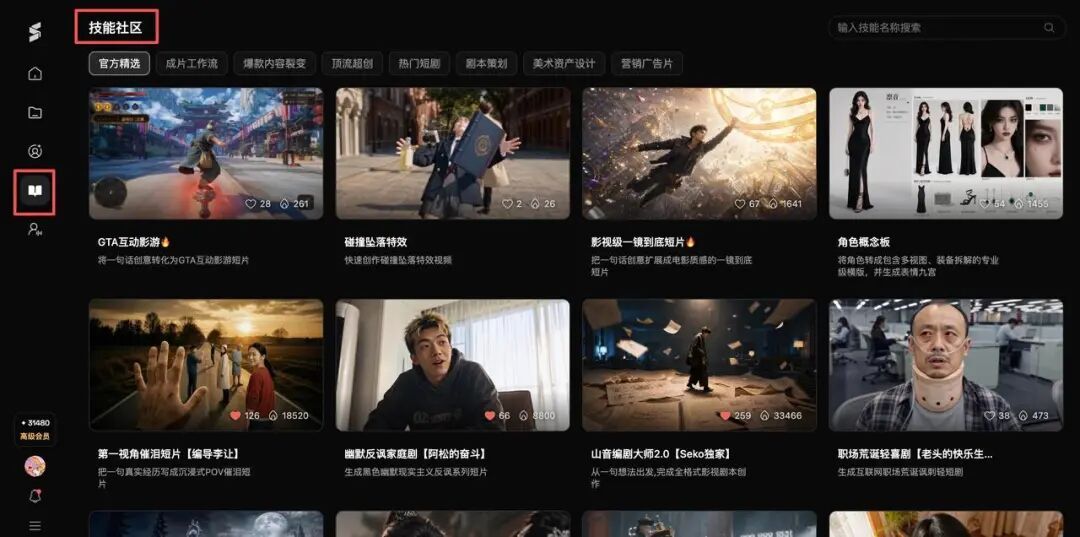
「Super Creator Skills」 on Seko
The popularity of the AI video Duhai answers a fundamental question: when AI levels the professional playing field, what does creativity ultimately compete on? For creator CHunye, the answer is differentiation and aesthetics. Although he has no formal training in film and television, he has brought the visual storytelling instincts developed through drawing comics, along with his eye for art and design, fully into his AI work.
That is exactly what SenseTime's Seko aims to achieve. In the year since its launch, Seko's user base has surpassed 1 million, growing 26-fold, while daily video production has reached 10,000 minutes. Seko has evolved from a creative tool into a creator growth platform, using Agents, an infinite canvas and a Skill ecosystem to build an "AI video dream factory" for creators. Whether you are a university student, a freelancer or simply someone with a story inside you, there is a stage here—as long as you have a story to tell.